
War and transport: electric trucks and charging infrastructure
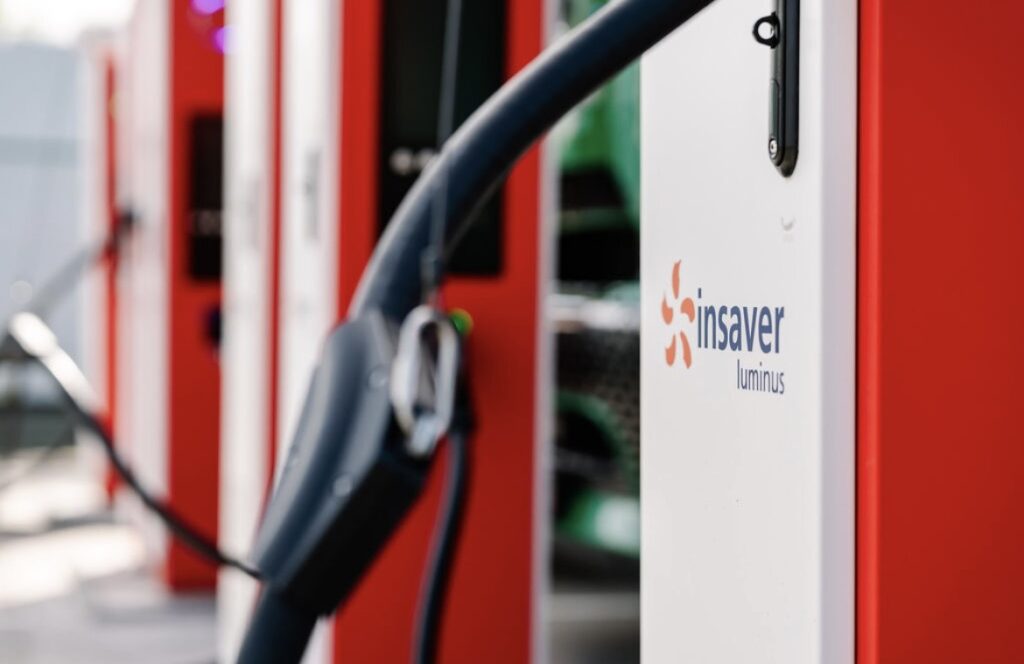
In recent months war and geopolitical tensions have dominated the headlines.The conflict in the Middle East has disrupted the energy market in an instant.The International Energy Agency (IEA) calls it the biggest disruption of global oil supply ever and notes that shipping through the strategic Strait of Hormuz has nearly come to a standstill .Oil […]
In recent months war and geopolitical tensions have dominated the headlines.
The conflict in the Middle East has disrupted the energy market in an instant.
The International Energy Agency (IEA) calls it the biggest disruption of global oil supply ever and notes that shipping through the strategic Strait of Hormuz has nearly come to a standstill .
Oil prices shot above $100 per barrel, and gas and electricity also became much more expensive .
The result? exploding transport costs and a logistics sector that suddenly has to adapt.
This blog shows how the current crisis is not only a wake‑up call but also an opportunity.
By switching to electric trucks, ultra‑fast charging infrastructure and large‑scale battery storage systems (BESS), transport companies can protect themselves against volatile fuel prices and supply shortages.
We explain why investing now makes sense and how Insaver can help.
Impact of the war on transport costs
The war around Iran has led to a rapid rise in energy prices; not only were the oil and gas markets affected, electricity prices also rose .
Transporters feel that directly in their fuel budgets.
According to an analysis by ABN AMRO the diesel price for large users increased from € 1.74 to € 2.15 per litre between late February and 19 March 2026, an increase of about 20 % .
Because carriers usually have to pay their diesel bill quickly while their invoices are only paid weeks or months later, this price increase also requires extra working capital
It is not only the pump that is becoming more expensive.
The war has also disrupted international trade chains.
Due to the closure of the airspace and rocket attacks on tankers, shipping through the Strait of Hormuz – a strait where normally 20 % of all oil and liquefied gas passes – has practically come to a standstill .
Shipping companies avoid risky routes and sail around Africa, meaning containers are at sea longer and rates rise .
They also charge a “war risk premium” of thousands of euros per container .
The costs for air freight also rise due to detours and reduced capacity .
For transport companies this means that every kilometre with a diesel vehicle becomes more expensive and the reliability of deliveries decreases.
More and more entrepreneurs realise that dependence on fossil fuels is a major risk.
The question is not if, but when the next shock will come.
Electrification as the answer
Less dependent on fossil markets
The alternative is obvious: electric trucks powered by locally generated and stored electricity.
Industry associations emphasise that households and businesses that invest in solar panels, batteries and smart control build direct protection against volatile energy prices .
The same applies to transport companies: by generating and storing your own electricity, you become less dependent on international oil and gas markets .
Electric trucks consume no diesel at all and are thus immune to sudden fuel price spikes.
They are also energy‑efficient: an electric motor converts more than 80 % of the energy into motion, whereas a diesel engine barely reaches 30 %.
Charging with solar or wind energy drastically reduces CO₂ emissions and disconnects your fleet from geopolitical risks.
Ultra‑fast chargers and BESS
Driving electric requires more than just plugging in.
Ultra‑fast e‑truck chargers deliver charging sessions of 350 kW or more, allowing heavy vehicles to recharge enough energy in less than an hour.
That results in minimal downtime and maximum deployability.
Combined with a Battery Energy Storage System (BESS), the charging peak can be flattened: the battery charges when there is surplus (for example during the day with solar panels or at night at lower tariffs) and discharges when charging the trucks.
This reduces the load on the grid and lowers peak tariff costs.
A BESS is also a buffer against grid congestion.
In many Flemish regions the electricity grid is saturated and large connections are hard to obtain.
BESS offers flexibility: you can continue charging and level peaks without having to upgrade the grid connection.
The Flemish network operator Fluvius and the regulator are even working on new contracts (Fall‑Back Flex) for companies with batteries to connect them to the grid faster.
This confirms that storage and flexibility are key to using grid capacity efficiently.
Financial benefits
In addition to energy savings and security, there are financial incentives.
The Flemish government stimulates investments in charging infrastructure and industrial batteries through loans and increased investment deductions.
Through the ecoboost loan companies can invest in sustainable technology at low interest rates, and in 2026 there is also a thematic deduction of 40 % for certain charging infrastructure .
Battery and charging systems often qualify for these tax advantages.
Combine that with lower fuel costs and lower grid costs due to peak reduction and the business case quickly becomes attractive.
Example: the project at EUTRACO
Insaver recently completed a large‑scale energy project for EUTRACO in Roeselare.
The logistics company wanted to electrify its fleet without remaining dependent on uncertain energy markets.
Together we built:
- Ultra‑fast chargers for electric trucks, enabling trucks to charge within their schedules.
- Industrial battery systems (BESS) with enough capacity to support charging sessions and flatten peak consumption.
- Solar panels on the roofs of warehouses and covered parking spaces for sustainable generation.
Thanks to this integrated approach EUTRACO obtains a large part of its electricity from its own solar energy and can optimally manage charging sessions with the battery.
That yields enormous cost savings and makes the company less vulnerable to volatile energy prices.
Moreover, EUTRACO thus contributes to the Flemish climate targets and the greening of the logistics sector.
Why start now?
Uncertainty in the energy markets is not a temporary problem.
The disrupted supply due to the war has shown how dependent our economy is on unstable regions .
ABN AMRO emphasises that a long‑term blockade of the Strait of Hormuz could push energy prices even higher .
Waiting for better times is risky: diesel prices can explode again and grid congestion can worsen.
By investing today in electric mobility and energy storage you build a buffer against these shocks.
The benefits at a glance
- Cost control: you are no longer dependent on unpredictable oil and gas prices .
- Fast charging without grid problems: ultra‑fast chargers and BESS make charging efficient and prevent expensive peaks.
- Sustainable image: your company leads the transition to zero‑emission logistics.
- Subsidies and tax benefits: thanks to ecoboost loans and increased investment deductions, investing becomes financially attractive .
- Avoid grid congestion: with a BESS you increase the flexibility of your connection and prepare for new contract forms such as Fall‑Back Flex.
Conclusion
The war in the Middle East shows us how fragile the fossil energy supply is.
For transport companies the rising fuel prices and disrupted supply chains are not just a cost item, but a threat to continuity .
By choosing electric trucks, ultra‑fast chargers and large‑scale battery storage you invest in security, sustainability and a future‑proof business model.
Insaver assists you at every step: from feasibility study to installation and smart control.
Contact us today and take the step towards logistics energy independence.
Stay tuned
Always want to be the first to know about the latest developments in renewable energy? Subscribe to our newsletter and receive the latest news directly in your inbox.
Subscribe to our newsletter


